
Energy Geostructures
Objective
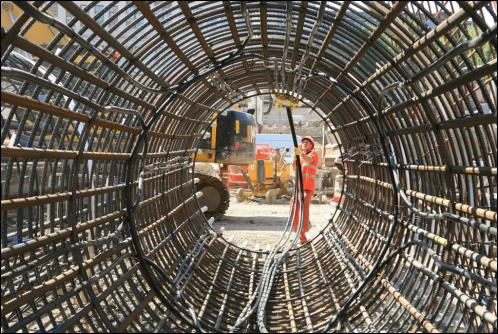
The increased need for renewable energy sources has led to expansion of shallow geothermal applications for heating and/or cooling of buildings. The integration of heat exchangers in those elements of the structure that interface with the ground, such as foundations, tunnels and diaphragm walls, is particularly attractive because of the inherent cost saving involved in combining a required structural component with the harvesting of geothermal energy.
Thermoactive geostructures present the additional benefit of relying on localized resources (the ground) and therefore do not need additional infrastructural investments. By providing an alternative to fossil fuels and reducing peak demand from the grid, they also provide an attractive tool towards energy independence and distributed generation with no adverse impact on the environment. However, the widespread application of this sustainable technology is currently hindered by the large heterogeneity in the development and regulatory framework in European countries.
By sharing knowledge and experiences, the use of thermoactive geostructures will increase, especially in countries with less experience. The Energy Geostructures working group works to promote public awareness and confidence in this technique and foster advancement in knowledge through collaboration in Europe.
Important documents
The Energy Geostructures working group has been active in promoting the COST Action TU 1405 GABI (Geothermal energy Applications in Buildings and Infrastructure) that operated between 2014 and 2019 and the COST Action CA21156 FOLIAGE (FOstering Large scale ImplementAtion of energy GEostructures) between 2021 and 2026.
As a result of these activities an open access book was jointly edited. The book present best practices and the current state of the art in the design, construction and monitoring of energy geostructures. The goal of the recommendations is to offer a practical and accessible guide for public and private stakeholders, professionals in construction and geotechnics and anyone interested in this technology. The book provides an integrated and coherent framework that supports all stages of the design process—from initial studies, conceptual modelling and site investigations to project development, monitoring, long term modelling and the evaluation of environmental impacts.
It can be freely downloaded at: https://link.springer.com/book/10.1007/978-3-032-30927-3
Members
Contacts
Marco Barla +39 0110904824 marco.barla@polito.it