
University of Cambridge (UCAM)
United Kingdom

1 INSTALLATION
The University of Cambridge is one of the world leading universities and is well-known for its research activities with a research income of nearly £400 million.
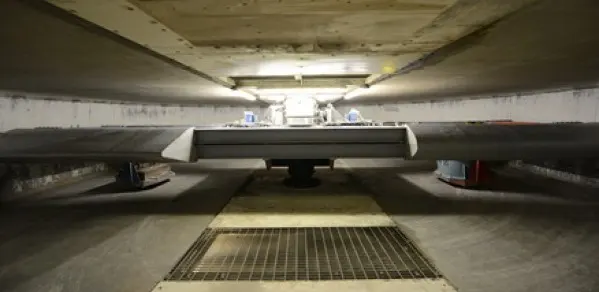
The Department of Engineering at the University of Cambridge (UCAM) has grown to become the largest department in the University and the largest integrated engineering department in the UK with approximately 190 faculty and PI status researchers, 300 postdoctoral researchers, 850 graduate students, and 1200 undergraduate students at any time, with about 320 students admitted each year. Internationally, Cambridge leads the 2020 Times Higher Education Rankings for Engineering and Technology outside the USA. The last REF assessment of UK research showed that Cambridge has the greatest concentration of world-leading engineering research in the country and the best environment for engineering research with a perfect score unrivalled by any other general engineering submission. The Geotechnical and Environmental Group was the recipient of an EPSRC JIF award for a new Centre for Geotechnical Process and Construction Modelling called the ‘The Schofield Centre’ (GR/M88280).
The Geotechnical group developed greatly by an EPSRC Platform grant (GR/T18660/01) and was key to establishing the EPSRC/Innovate UK funded Innovation and Knowledge Centre for Smart Infrastructure and Construction (CSIC), currently running its Phase 2 (EP/N021614/1). More recently, the National Research Facility for Infrastructure Sensing (NRFIS) was established at Cambridge as part of the UK Collaboratorium for Research on Infrastructure & Cities (UKCRIC) portfolio of research and innovation facilities with a £18M fund from EPSRC which was fully matched by UCAM. The geotechnical group also benefits from the EPSRC CDT in Future Infrastructure and Built Environment: Resilience in a Changing World (FIBE2) that supports training of doctoral students (GR/EP/L016095/1).
Meet Our Team
Dr. Sam Stanier
Master’s degree in Civil Engineering, Doctorate in Geotechnical Engineering
Sam has a Master’s degree in Civil Engineering (2007) and a Doctorate in Geotechnical Engineering (2011), both awarded by the University of Sheffield. Following award of his doctorate Sam moved to the University of Western Australia to work at the Centre for Offshore Foundation Systems where he worked on a wide range of geotechnical problems related to the offshore energy sector, on both oil and gas and offshore renewable energy (wind and wave energy in particular) related applications.
Sam is a geotechnical engineer by specialisation and previous research has resulted in – to name a few – methods for predicting the “punch-through” or “crème brûlée” failure of jack-up rigs, new tools for subsea pipeline soil interaction assessment, numerical techniques for measuring displacements in images, and a simple model that explains why sand castles stand up!

Dr. Giulia Viggiani
a PhD in Geotechnical Engineering
Giulia is a member of the Department of Engineering at the University of Cambridge. Before this, she was Full Professor of Geotechnics at Università di Roma “Tor Vergata” where she was Head of the Board of Studies in Civil and Environmental Engineering. She obtained a Laurea in Civil Engineering from Università di Napoli Federico II in 1989 and a PhD in Geotechnical Engineering from City University, London, in 1994. She has been MTS Visiting Professor of Geomechanics at the University of Minnesota, and Academic Visitor at Imperial College (JLE-Link Project), and at the Max Planck Institute, Leipzig.
The main thrust of Giulia’s research is on the applications of soil mechanics to geotechnical engineering, and deals mainly with underground construction, foundation engineering, and earthquake geotechnical engineering. She has been involved in many infrastructural projects in Italy and the UK, including, e.g., monitoring building response to construction of the Jubilee Line Extension in London, the design and construction of Lines 1 and 6 of Napoli underground and of Line C of Roma underground, and the design of the foundations, anchor blocks and terminal structures of the Strait of Messina Bridge.